South Congress (SoCo) Airbnb Investment Guide: ROI, Regulations & Best Practices
Austin is not a single market. It is a patchwork of neighborhoods, each with its own rhythm, guest profile, and revenue potential. A luxury condo overlooking Lady Bird Lake performs differently from a pet-friendly bungalow in East Austin, and a Hill Country estate near Dripping Springs attracts a completely different traveler than a walkable studio on Rainey Street. For property owners and investors, understanding these distinctions is the difference between a listing that fills weekends and one that consistently commands premium rates year-round.
What makes SoCo particularly compelling for investors is the combination of high average daily rates, strong weekend occupancy, and a guest profile that skews toward travelers willing to pay a premium for location and atmosphere. Unlike neighborhoods where demand hinges on a single event or season, South Congress draws visitors year-round. The result is a market where well-managed properties consistently outperform citywide averages in both revenue and review scores.
SoCo ROI: What the Numbers Actually Look Like
Median home values in the South Congress area hover around the $700,000 to $750,000 range, placing it among Austin's more expensive neighborhoods for investment purchases. However, SoCo properties command premium nightly rates that offset that higher entry point. Well-positioned two-bedroom listings in the area regularly achieve average daily rates of $250 to $350, with top-performing properties reaching $400 or more during peak demand periods. These rates are meaningfully higher than Austin's citywide median ADR, which sits around $180 to $286 depending on the data source and property type.
Top TLDR:
South Congress is one of Austin's highest-performing Airbnb neighborhoods, with premium nightly rates driven by strong leisure demand, walkability, and year-round cultural appeal. This South Congress (SoCo) Airbnb investment guide covers ROI expectations, Austin's current STR regulations, guest demographics, and the operational best practices that separate profitable listings from underperformers. Match your property to SoCo's guest profile and work with an experienced Austin management team to maximize returns.
Why South Congress Stands Out in Austin's Vacation Rental Market
South Congress Avenue is not just a popular street in Austin—it is one of the most recognizable and consistently booked short-term rental corridors in all of Texas. The stretch of boutique shops, vintage stores, live music venues, murals, and chef-driven restaurants has become synonymous with the Austin experience itself, and that built-in brand recognition translates directly into booking demand for property owners.
What makes SoCo particularly compelling for investors is the combination of high average daily rates, strong weekend occupancy, and a guest profile that skews toward travelers willing to pay a premium for location and atmosphere. Unlike neighborhoods where demand hinges on a single event or season, South Congress draws visitors year-round. The result is a market where well-managed properties consistently outperform citywide averages in both revenue and review scores.
For owners evaluating where to invest—or how to get more from a property they already hold—SoCo rewards those who understand its specific dynamics. This guide breaks down those dynamics across ROI expectations, regulatory requirements, guest behavior, and operational strategy.
SoCo ROI: What the Numbers Actually Look Like
The first question every investor asks about South Congress is whether the numbers work. The honest answer is that SoCo delivers strong returns, but only if you account for realistic acquisition costs, operating expenses, and the management intensity the neighborhood requires.
Median home values in the South Congress area hover around the $700,000 to $750,000 range, placing it among Austin's more expensive neighborhoods for investment purchases. However, SoCo properties command premium nightly rates that offset that higher entry point. Well-positioned two-bedroom listings in the area regularly achieve average daily rates of $250 to $350, with top-performing properties reaching $400 or more during peak demand periods. These rates are meaningfully higher than Austin's citywide median ADR, which sits around $180 to $286 depending on the data source and property type.
Occupancy in SoCo follows a seasonal pattern that favors spring and fall. March is typically the strongest month, fueled by South by Southwest, while October brings a second peak during Austin City Limits. Summer sees slightly softer leisure demand due to Austin's heat, though weekend bookings remain solid. Winter dips the lowest, but holiday travel and New Year's Eve provide pockets of elevated pricing.
Annualized, a well-managed SoCo two-bedroom can realistically generate $50,000 to $80,000 in gross revenue. After accounting for property management fees, cleaning, maintenance, supplies, insurance, taxes, and the 17% Hotel Occupancy Tax, net operating income typically falls in the range that produces a competitive cash-on-cash return relative to other Austin neighborhoods—particularly when you factor in the long-term appreciation SoCo properties have historically delivered.
The key variable in that equation is management quality. The gap between a professionally managed SoCo listing and an owner-managed one is wider here than in most markets, because the guest expectations are higher and the competitive landscape is denser. Sora Stays' data-driven approach to pricing and listing optimization is specifically designed to capture revenue that self-managing hosts leave on the table.
Austin STR Regulations That Affect SoCo Investors
No SoCo investment analysis is complete without a clear understanding of Austin's short-term rental regulations, which have shifted significantly in recent years and continue to evolve.
Austin categorizes STRs into three types. Type 1 covers owner-occupied properties where the host maintains a homestead exemption. Type 2 applies to non-owner-occupied single-family or duplex rentals—the classic investor-owned vacation rental. Type 3 governs units in multifamily buildings such as condos and apartments. The type that applies to your SoCo property determines your licensing pathway, fee structure, and the restrictions you face.
In September 2025, Austin City Council adopted updated STR regulations that took effect on October 1. Key changes include a shift to two-year license terms instead of annual renewals, the removal of Certificate of Occupancy and proof-of-insurance requirements for applicants, and the allowance for tenants to operate STRs with written landlord permission. Notably, the new rules also impose a 1,000-foot spacing requirement between STRs owned by the same individual and establish density caps in multifamily buildings.
For SoCo investors specifically, the regulatory landscape hinges on your property type. If you own a single-family home that you do not occupy, you are operating under Type 2 rules. If you own a condo in one of SoCo's multifamily developments, Type 3 applies, and your building's zoning (residential versus commercial) determines whether the STR cap is set at the greater of one unit or 10% of total units in a residential building, or 25% in a mixed-use building.
Hotel Occupancy Tax is another critical compliance requirement. The combined rate is 17%, composed of a 9% city tax, a 6% state tax, and a 2% venue project tax. As of April 2025, platforms like Airbnb and Vrbo are required to collect and remit HOT on behalf of hosts for bookings made through their platforms. For revenue generated outside of those platforms, owners must still collect and remit directly.
Navigating compliance alone is manageable but time-consuming, and the penalties for getting it wrong—fines up to $500 per day of violation and potential license revocation—make it a high-stakes administrative task. For a complete walkthrough of the licensing process and its implications, see our guide to Airbnb laws and regulations in Austin. Sora Stays handles STR licensing, renewals, and tax compliance for every property we manage, removing that burden entirely.
Who Books SoCo—And What They Expect
Understanding SoCo's guest profile is essential for setting up a property that converts browsers into bookers and bookers into five-star reviewers.
The dominant guest segment in South Congress is leisure travelers, typically couples, bachelorette groups, and small friend groups on weekend getaways. These guests choose SoCo specifically for walkability—they want to step outside and be immersed in the South Congress experience without needing a car. Proximity to restaurants like Perla's, Uchi, and Home Slice, plus the concentration of boutiques and street culture, is the primary booking motivator.
A secondary but meaningful segment is event-driven visitors. SXSW badge-holders, ACL festival-goers, and Formula 1 race attendees all create demand surges that spill into SoCo, particularly because the neighborhood's dining and nightlife scene gives guests a reason to stay even when they are not at the event venue.
Business travelers represent a smaller slice of SoCo bookings compared to Downtown Austin, but they do exist—particularly creative professionals, marketing teams, and tech workers who prefer a neighborhood with character over a conventional business hotel.
Across all segments, SoCo guests tend to have elevated expectations. They are paying a premium for location, and they expect the property to match. That means curated interiors with local personality, high-quality linens and toiletries, fast Wi-Fi, keyless entry, and responsive communication. Generic apartment furnishings or a slow response time will earn a four-star review in SoCo—and in a market this competitive, four stars is a liability.
Screening guests carefully is another important layer of managing a SoCo property, especially given the bachelorette and group-travel demand that can bring noise and wear-and-tear concerns. Our approach to vetting potential guests helps protect both your property and your relationship with neighbors.
Best Practices for SoCo Airbnb Hosts
The operational playbook for a high-performing SoCo listing goes beyond the basics. Here are the practices that consistently separate top-tier performers from the middle of the pack.
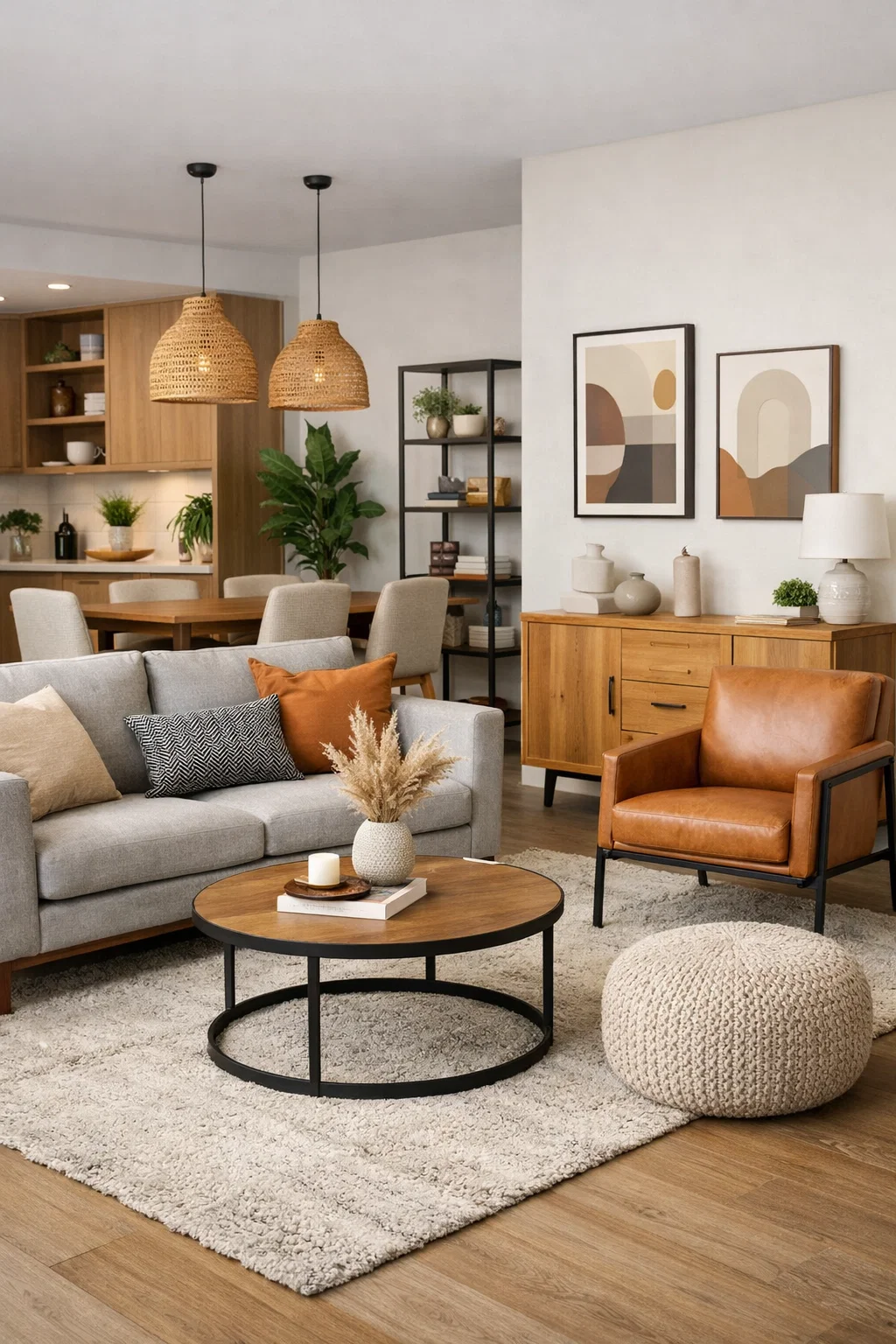
Design with intention. SoCo guests are visual. They photograph their stays, they share on social media, and they browse listings with a design-conscious eye. Properties that lean into Austin's eclectic aesthetic—think curated art, statement furniture, warm textures, and locally sourced touches—outperform generic staging by a measurable margin. If your current furnishings do not generate a reaction, they are costing you revenue.
Invest in professional photography. In a neighborhood with dense listing competition, your cover photo has roughly three seconds to earn a click. A flat smartphone shot of a living room will not cut it. Professional photography that captures natural light, spatial flow, and the property's best angles is one of the highest-ROI investments you can make. Include at least one exterior shot that communicates the SoCo location.
Price dynamically, not statically. SoCo's demand swings dramatically around events, seasons, and even day of the week. A flat nightly rate leaves money on the table during SXSW and loses bookings during January. Dynamic pricing tools calibrated to Austin's event calendar and real-time demand signals are essential for maximizing revenue without sacrificing occupancy.
Offer what guests cannot get at a hotel. The competitive set in SoCo includes not just other Airbnbs but also boutique hotels like Hotel San Jose and South Congress Hotel. Your advantage as a vacation rental is space, privacy, a kitchen, outdoor areas, and neighborhood immersion. Lean into those advantages—a private patio, a stocked coffee bar, a curated local guidebook—and make them visible in your listing.
Maintain relentlessly. SoCo properties see heavier use and higher guest expectations than suburban rentals. Turnovers need to be flawless, minor maintenance issues need to be addressed before they become reviews, and deep-cleaning schedules need to be frequent enough to prevent accumulative wear. Sora Stays' on-the-ground cleaning and maintenance teams operate across Austin with the precision that SoCo properties demand.
SoCo Compared to Other Austin Investment Neighborhoods
Investors often weigh SoCo against other high-performing Austin neighborhoods before making an acquisition decision. Here is how SoCo stacks up.
Compared to Downtown Austin, SoCo offers a residential feel with comparable nightly rates but generally lower acquisition costs for single-family homes. Downtown wins on weekday corporate demand, while SoCo dominates weekend leisure bookings. For investors who want a balanced calendar, SoCo's lifestyle appeal produces more consistent year-round interest.
Compared to East Austin, SoCo commands higher ADRs and benefits from a more established brand identity, but East Austin offers lower entry prices and stronger cash-on-cash returns for investors willing to ride the neighborhood's growth trajectory. East Austin is the rising market; SoCo is the proven one.
Compared to the Hill Country and Dripping Springs, SoCo trades weekend getaway appeal for urban walkability. Hill Country properties attract groups and wedding-party travelers willing to drive, while SoCo captures guests who want everything on foot. The management complexity differs as well—SoCo requires tighter turnaround operations, while Hill Country properties require more extensive property maintenance.
Start With a Revenue Estimate for Your SoCo Property
Every South Congress property has a specific revenue ceiling determined by its size, layout, design, and management approach. The gap between what a SoCo property earns under self-management and what it earns under professional management is often the difference between a break-even investment and a genuinely profitable one.
At Sora Stays, we manage vacation rentals across Austin and the surrounding areas with a boutique, hands-on approach that treats every listing as a hospitality product, not just a property. From listing optimization and dynamic pricing to 24/7 guest communication, professional cleaning, and full regulatory compliance, we handle the operational details so you can focus on returns.
Contact us for a free, personalized revenue estimate for your South Congress property. We will show you what your listing can realistically earn—and how we get it there.
Bottom TLDR:
South Congress remains one of Austin's most profitable Airbnb neighborhoods, with premium nightly rates, strong leisure demand, and year-round cultural appeal that insulates owners from sharp seasonal dips. This South Congress (SoCo) Airbnb investment guide confirms that ROI depends heavily on design quality, dynamic pricing, regulatory compliance, and professional management. Get a free revenue estimate from Sora Stays to see what your SoCo property can earn with expert Austin vacation rental management.
Full-Service Luxury STR Management
What We Offer:
Listing optimization across Airbnb, VRBO, and more
Professional staging and design guidance to capture attention
Dynamic pricing to stay competitive in Austin’s fast-paced market
24/7 guest communication with a hospitality-first approach
On-the-ground operations: cleaning, restocking, inspections, and maintenance
Owner reporting with clear monthly financials and performance tracking
Work with a Top-Rated Austin Airbnb Cohost
If you're searching for the best Airbnb cohost in Austin, a trusted partner for vacation rental management, or a professional solution for Airbnb property management in Austin, you've found it.
Sora Stays is built to serve discerning property owners who want maximum revenue and minimum effort.
Work with a Top-Rated Austin Airbnb Cohost
Let’s discuss how we can elevate your property and simplify your hosting experience. Reach out today and see why we’re Austin’s leading luxury short-term rental management company.
Why Choose Sora Stays as Your Airbnb Cohost in Austin?
From East Austin condos to Hill Country estates, we handle every detail of your rental with five-star precision. Our local expertise, hands-on approach, and luxury hospitality standards make us the trusted choice for vacation rental property management in Austin.
We’re more than just Airbnb cohosts—we’re strategic partners dedicated to protecting your asset, enhancing guest experience, and optimizing profitability.